Otto
The North WaterOtto is the German harpooner aboard the Volunteer: a highly capable whaler whose physical strength and technical work coexist with a speculative religious outlook. He repeatedly considers what the visible world cannot explain, and his exchanges with Patrick Sumner set spiritual conviction against Sumner’s skepticism. In the ship’s dangerous northern voyage, Otto’s work is concrete and bodily; his explanations of death, dreams, and moral responsibility reach beyond what can be seen or measured.
Identity and Work
When Cavendish assembles a drinking party in Lerwick, he describes Otto as an enigmatic Welshman—an introduction that treats the German harpooner as difficult for the rest of the party to read. Otto’s place in the crew is otherwise defined by his whaling skill. He is broad-chested and powerfully built, and can throw a harpoon a considerable distance without visible effort. That strength is not merely a physical trait: it is part of his practical competence in an occupation where the crew’s work depends on coordination, equipment, and the ability to act under threat.
Otto’s skill becomes clear during the Volunteer’s first whale hunt in the North Water. After Black strikes the whale, Otto’s boat moves in close. Otto takes up the harpoon and drives it into the animal; the whale convulses and the boats are thrown about. When it rises again, the other harpooners join the attack, and the crew eventually kills and processes it. Otto and Black later climb onto the whale’s body using crampons, cut out blubber, and remove baleen and other valuable material. The carcass is estimated to yield ten tons of oil and more than half a ton of whalebone, worth close to nine hundred pounds if market prices hold. Otto’s labor belongs to a commercial enterprise, but the hunt also exposes the danger and physical demands behind that valuation.
He also helps Patrick Sumner in a less specialized task. Put to work carrying heavy blocks of blubber from the deck to the hold, Sumner slips on the greasy surface and nearly falls into the hold. Otto saves him. Sumner ends the exhausting day bruised and stiff, yet satisfied by the bodily effort and able to sleep without laudanum. Otto’s intervention is brief, but it connects his strength at sea to a practical act of assistance between shipmates.
Spiritual Conviction and Sumner
Otto’s most distinctive conversations with Patrick Sumner concern the relation between body and soul. He proposes that, during the hours Sumner was lost on the ice, Sumner’s soul may have left his body and traveled into a higher spiritual realm. He draws on Swedenborg’s account of a place where the dead gather before being divided between salvation and damnation. Sumner remembers pain, fear, and a blank interval instead; Otto interprets the experience through a spiritual framework that Sumner does not share.
Their disagreement turns on whether reality is limited to what the senses can verify. Otto argues that the visible world is not the whole of existence and treats dreams and visions as real in their own way. He also reasons that the souls of the dead must take bodily forms in heaven. Sumner challenges the practical value of such beliefs, especially in light of Otto’s imposing, capable body: the harpooner’s physical authority seems an unlikely counterpart to his interest in spiritual abstraction. The contrast does not make Otto’s faith a retreat from work. He performs dangerous labor while maintaining that thought, imagination, and divine purpose belong to reality too.
Otto later brings that theology to the captive bear. He explains to Sumner that if the bear is sold, the proceeds would go to the dead man’s widow, but the widow is absent and the bear still needs care. Releasing it is another possibility, yet the mother is dead and the young animal may not survive alone. When Sumner eventually helps the now-plump bear out of its cask, Otto assists him. Sumner recognizes that regular feeding has left the bear without the skills to hunt; Otto agrees that it is unlikely to survive and mentions that a furrier in Hull might pay a fair price for its skin. His position holds compassion and practical calculation together: the bear is a living dependent, but its future is constrained by its captivity and the human decisions that created it.
Dreams, Danger, and Responsibility
After Arthur Brownlee’s death, Otto privately warns Sumner that Cavendish will bring disaster. He says that he has seen the outcome in a dream: Sumner will survive, while the others will drown, starve, or die of cold. Sumner dismisses the warning, regarding dreams as mental residue rather than prophecy. The exchange recalls their earlier disagreement over Sumner’s time on the ice. For Otto, dreams can disclose what ordinary perception misses; for Sumner, they have no authority to predict events. The warning arrives as the ship’s circumstances are becoming more perilous, giving Otto’s spiritual interpretation a place within the narrative’s growing uncertainty without making Sumner accept it.
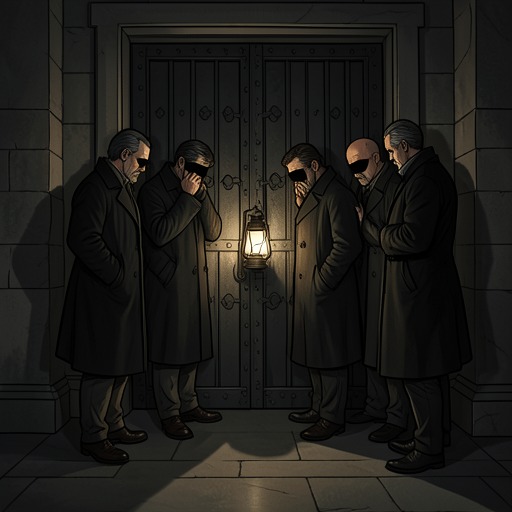
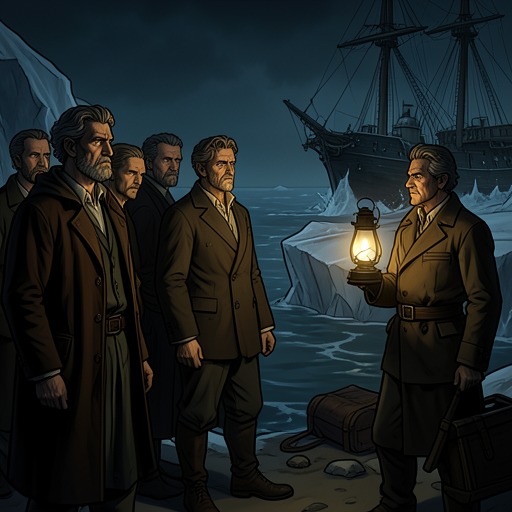
Otto’s belief in providence is not presented as certainty that suffering will be prevented. After Cavendish and the two Yaks are found dead, Otto directs the burial of Cavendish in a shallow trench covered with stones. Because the Yaks’ funerary customs are unknown to the survivors, their bodies are left where they were found, and the snow house is collapsed over them. Otto then gathers the men in the tent and leads a prayer for mercy, for the dead, and for the living to be preserved from despair. His prayer asks the crew to trust in providence even while confused and suffering. The men respond unevenly: some bow their heads, while others remain physically restless; Samuel McKendrick and several others weep.
Narrative Role
Otto’s role is not to settle the conflict between spiritual belief and material explanation. He gives it a human voice within the ordinary routines of a whaling ship: a harpoon thrown from a boat, a shipmate rescued from a fall, a young animal whose survival depends on decisions made by people. He speaks of the soul and providence, but he also confronts the practical consequences of capture, hunger, and death. His exchange with Sumner therefore links metaphysical questions to immediate obligations rather than separating faith from the material world.
The contrast between the two men also shapes the significance of Otto’s dream. Sumner’s skepticism is explicit, while Otto treats the unseen as potentially meaningful; neither the warning nor the later deaths erase the difference between them. At the winter camp, however, Otto’s prayer becomes a collective act amid loss and bewilderment. He cannot explain the deaths or remove the danger, but he offers the survivors a language of mercy and responsibility. The harpooner who works with force and precision thus becomes, at crucial moments, one of the crew’s interpreters of what their labor and suffering cannot account for.